
Back Pain Treatment in Nashville

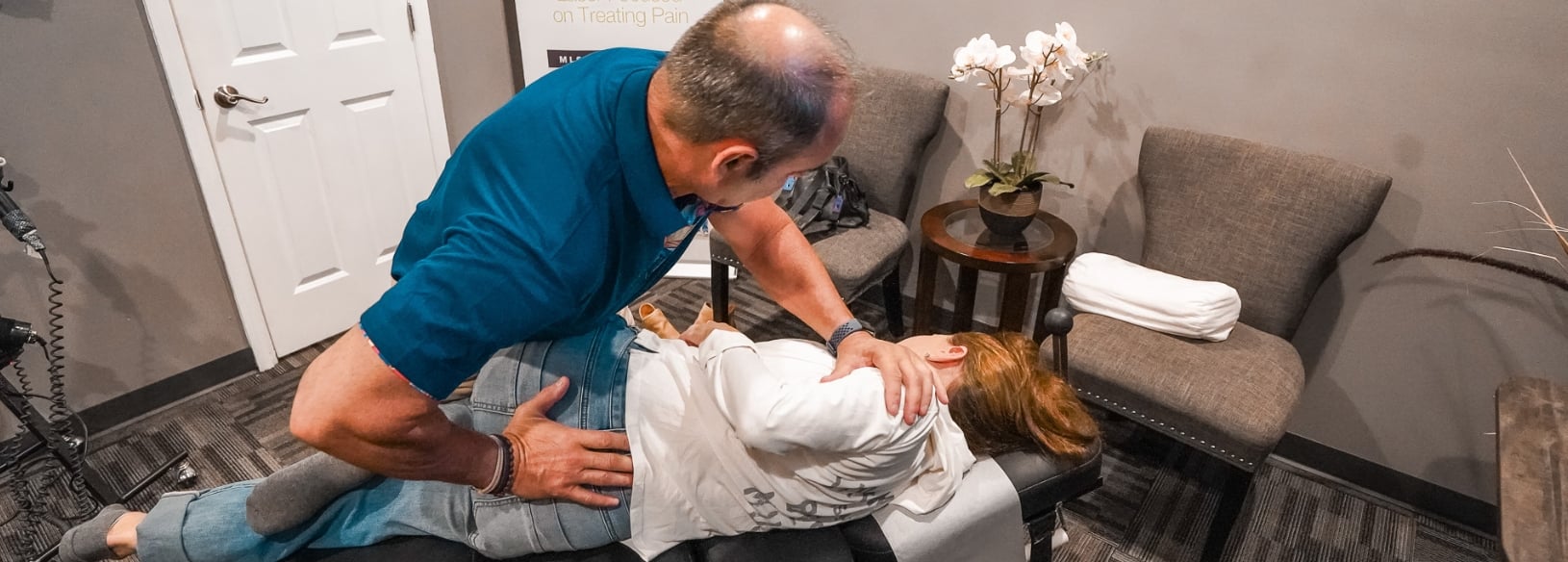

What May Be Causing Your Back Pain
Where is your pain?
| If your pain is… | What your clinician looks at | Go next to |
|---|---|---|
| In the lower back only | Joint movement, muscle strain, posture, and daily mechanics | Chiropractic Adjustments |
| In the upper or mid back | Posture, work setup, rib and joint movement | Chiropractic Adjustments |
| In the back with leg pain, numbness, or tingling | Whether a nerve is involved | Sciatica Treatment, Herniated Disc Treatment |
| Worse with standing or walking and eased by sitting | Narrowing around the nerves | Spinal Stenosis Treatment |
| After a car accident or fall | Injury pattern and timing | Auto Accident Injury Treatment |
How long have you had it?
| Duration | What it usually means | What the visit focuses on |
|---|---|---|
| Under 4 weeks (acute) | Most people improve over time | Ruling out red flags, staying active, comfort measures |
| 4–12 weeks (subacute) | Slower recovery than expected | Reassessing the plan, adding exercise, considering referral |
| Over 12 weeks (chronic) | Often needs a broader plan | Exercise, rehab, and a longer-term approach |
If you haven’t improved after four to six weeks, your clinician should reassess the plan and consider referral to a spine specialist.
When back pain needs urgent medical care
| Go to an emergency room or call your doctor right away if back pain comes with any of the following: |
|---|
| New trouble urinating, or new loss of bladder or bowel control |
| Numbness around the groin, buttocks, or inner thighs |
| Leg weakness that is new or getting worse |
| Weakness or numbness in both legs |
| Fever or chills, a recent infection, or an injury that penetrated near the spine |
| Pain after a major fall or accident |
Don’t wait for a chiropractic appointment if these appear.
A note on treatment options
Your evaluation guides which services we recommend. Chiropractic adjustments, soft-tissue work, and exercise are common starting points. Other services, including spinal decompression, deep tissue laser therapy, and shockwave therapy, may be discussed when your symptoms or response to care suggest they could help. Ask your clinician why a service is recommended for you and how you’ll know whether it’s working.
What to Expect When You Come In for Back Pain
Review your progress
We check your response and change the plan or refer you if needed.
Understand your options
We explain what we think is driving your pain and which care fits.

Tell us your story
Describe when your pain started, what makes it better or worse, and how it affects your day.
Get examined
Your clinician checks movement, strength, reflexes, and sensation as needed.
Book Your Appointment Today
Back Pain FAQ's
What’s the most common cause of back pain?
Muscle strain, joint irritation, disc problems, and daily mechanics such as prolonged sitting or repetitive lifting. Your exam helps identify the likely source.
When should I see a chiropractor for back pain?
Consider an evaluation if pain persists beyond a few days, limits your activity, or keeps coming back. See a medical provider right away if you have any red-flag symptoms listed above.
Can you help with lower back pain and upper back pain?
We evaluate both. The cause and best approach can differ, so your clinician starts with an examination.
What treatments do you use for back pain?
Care may include chiropractic adjustments, soft-tissue therapy, corrective exercises, posture coaching, and—when appropriate—spinal decompression or other therapies. Your clinician will discuss your options based on your evaluation.
Is it safe to exercise with back pain?
Staying gently active is usually better than bed rest. We typically recommend guided movement and stabilization rather than complete rest.
Will I need an X-ray or MRI?
Not always. Imaging is generally reserved for severe or worsening nerve symptoms, or when a serious cause is suspected.
How long until I feel better?
It depends on the cause and how long you’ve had it. Many people improve over weeks, and your clinician reviews progress at set points.
What are red flags that require urgent medical attention?
Severe trauma, fever, unexplained weight loss, loss of bowel/bladder control, or progressive weakness should be evaluated urgently.